Bunion Correction
Modern bunion correction tailored to your foot and goals. Our team will advise on surgical and non-surgical options.
- Comprehensive consultation
- Personalised treatment plan
- Clear recovery guidance
Step-by-step support from assessment through to aftercare, helping you return to comfortable walking.
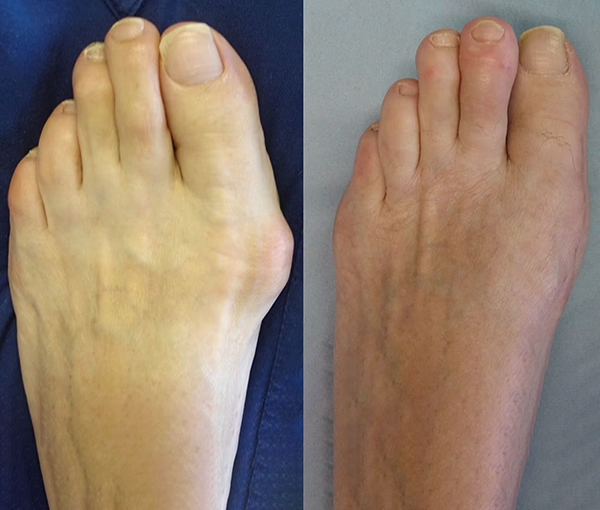
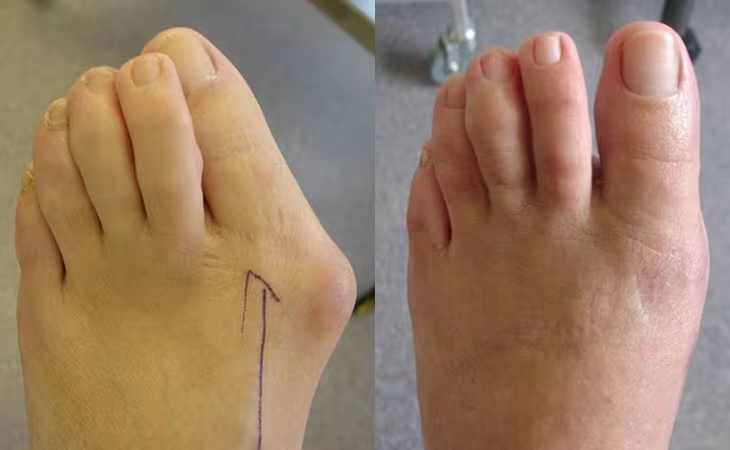
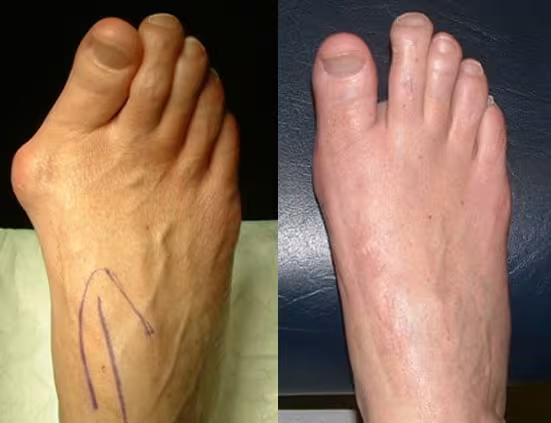
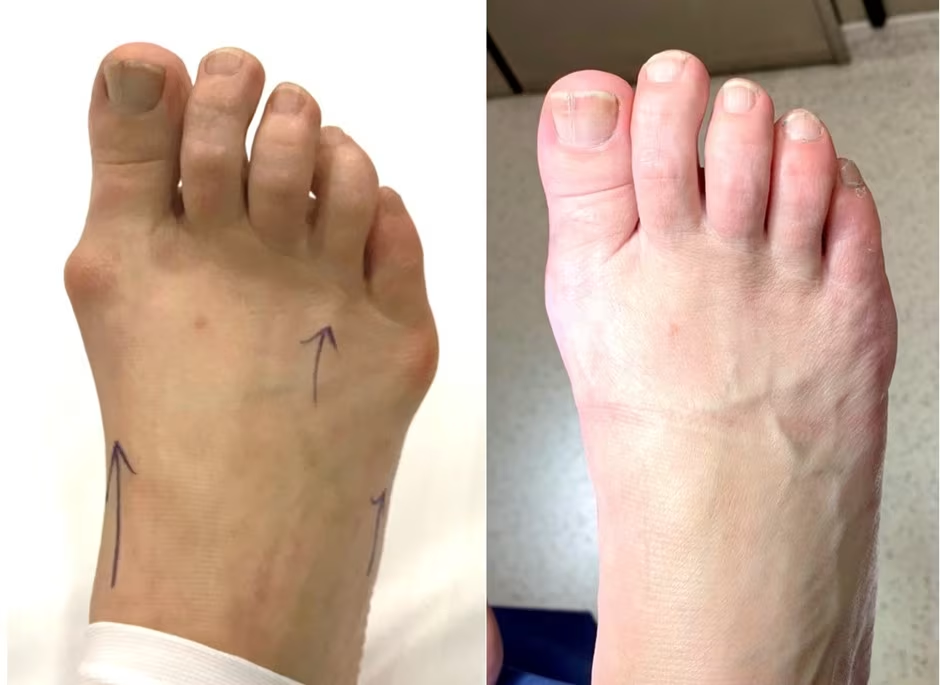
Bunion Correction at the Foot & Ankle Centre offers advanced surgical solutions to realign the big toe, relieve pain, and restore natural foot function. A bunion (hallux valgus) occurs when the big toe shifts out of alignment, creating a bony bump that can cause pain, swelling, difficulty wearing shoes, and progressive joint damage.
Our specialist foot and ankle surgeons use state-of-the-art, minimally invasive and traditional techniques—including keyhole bunion surgery, Lapidus fusion, and osteotomy procedures—to correct both the visible deformity and the underlying structural misalignment. This ensures long-lasting results, improved walking comfort, and a more natural foot shape.
Bunion correction surgery at the Foot & Ankle Centre is tailored to each patient’s anatomy, lifestyle, and severity of deformity. With high-precision imaging, advanced fixation methods, and modern surgical planning, we deliver safe, effective outcomes with reduced downtime and faster recovery.
FAQs
Bunion correction surgery realigns the bones and soft tissues around the big toe joint to remove the bunion bump, straighten the toe, and restore proper foot mechanics. It may involve bone cuts, joint realignment, or fusion, depending on severity.
You may benefit if you have persistent pain, difficulty finding comfortable shoes, toe crowding or overlapping, swelling or redness, restricted movement, or a bunion that continues to worsen. A consultation will confirm if surgery is appropriate.
Options include minimally invasive (keyhole) bunion surgery, Chevron and Scarf osteotomies, Lapidus fusion, and soft tissue correction. Your surgeon will recommend the best technique based on your bunion’s severity, foot structure, and lifestyle goals.
The procedure is performed under local or general anaesthetic, so you won’t feel pain during surgery. Mild discomfort is expected during recovery but is manageable with standard pain relief.
Most patients can walk in a specialised post-operative shoe immediately. Typical recovery: 2–6 weeks reduced swelling/early mobility; 6–12 weeks return to most daily activities; 3–6 months full recovery. Timelines vary by technique.
Recurrence is uncommon when structural alignment is fully corrected. Our surgeons address the underlying bone and joint mechanics to ensure long-lasting stability.
Risks include infection, stiffness, swelling, nerve irritation, or recurrence. Your surgeon will explain these and take steps to minimise them.
Many patients with mild to moderate bunions are candidates for minimally invasive techniques, which use smaller incisions, reduce soft-tissue disruption, and promote faster healing with minimal scarring.
Driving is typically safe once you can walk comfortably and control the pedals—usually after 4–6 weeks, depending on which foot was operated on. Confirm with your surgeon.
Contact the Foot & Ankle Centre via our website, call the clinic, or submit an online enquiry. Our team will arrange a personalised assessment and guide you through your options.